

What If ‘Non-Toxic’ Wellness Isn’t About Products at All?
A critical exploration of the non-tox wellness movement beyond consumerism.

There’s a certain irony in how we talk about toxicity these days.
We buy glass jars to replace plastic. We switch to “clean” deodorant. We spend hours curating non-toxic shopping lists, convinced we’re protecting our health only to realize toxicity doesn’t only live in what we consume.
The wellness industry has built a billion-dollar empire from selling the illusion of control. If you buy the right supplements, manifest the right mindset, or purify your home, you can protect yourself from the chaos of the world.
And for most of us, (myself included), we cling to these things not only for their utility, but for the momentary relief they provide us. It’s a way to reclaim our health. To escape. From the hyper-palatable foods that scatter the grocery aisles, the microplastics in our…well, everything… and the deceptive marketing schemes that place profit over our health.
But when we look beyond our pantries, closets and shelves “non-toxic life” isn’t really about the products. It’s about a promise: if we curate our environments “healthy” enough, we’ll be protected from harm.
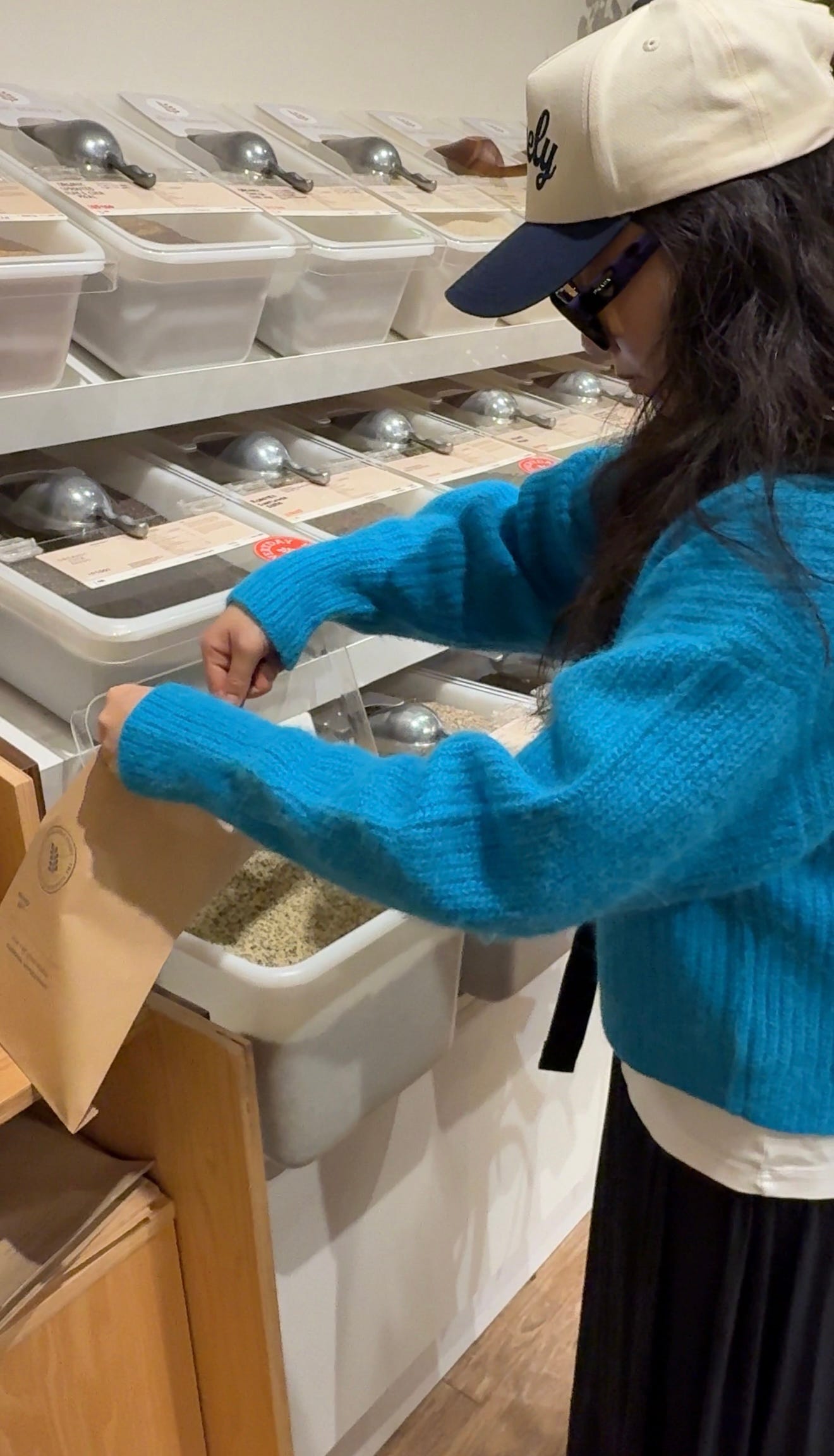
I believe the non-toxic movement stands for something real: a desire to live with intention, to minimize harm, to care for our bodies and the planet. That instinct is beautiful and I want to exist in a world where health is achievable for everyone.
But I believe we must expand our thinking of the non-toxic movement beyond consumerism. Because when our ability to access or afford the organic, grass-fed, non-toxic “thneed” it reveals an even perhaps larger call in the ways we connect with each other, with our neighbours, and our ecosystems.
Non-toxic living doesn’t stop at buying “green.”
It also has to include:
Consuming less and creating more: prioritizing repair, reuse, and longevity over constant replacement.
Supporting a circular economy: investing in local, ethical, or regenerative systems that give more than they take.
Advocating for corporate responsibility: holding companies accountable for environmental and social impact instead of shifting all the blame to individuals.
Valuing relationships as much as routines: choosing care, patience, and compassion over competition and perfection.
Speaking with empathy: being mindful of how we talk about health, privilege, and access.
Honouring labour: treating service workers, caretakers, and farmers with respect and fair compensation.
Practicing inclusive wellness: ensuring that well-being isn’t only available to those who can afford it—offering resources, knowledge, and solidarity.
Engaging in civic care: advocating for policies that protect clean water, housing, mental health supports, and community spaces.
Reconnecting with nature: remembering that the most powerful form of detox is often found in fresh air, soil, and shared stewardship.
….and the list goes on…
When we fail to include these dimensions, the entire non-tox culture risks reproducing the same logic of harm it’s trying to dismantle.
The most radical form of detox isn’t only found in our shopping carts.
It’s in dismantling the systems that make health a privilege and rebuilding the relationships and ecosystems that make it possible.
Reflective Questions for Non-Toxic Living (Beyond What We Can Buy)
How do I define “wellness” when I remove what I can purchase from the equation?
→ What does care look like in my relationships, routines, or communities when it’s not attached to consumption?Who or what pays the cost of my comfort?
→ From the products I use to the systems I participate in, whose labour, land, or health sustains my version of “non-toxic” living?What would it look like to practice detoxing in my interactions, not just my environment?
→ How can I communicate, advocate, and connect in ways that reduce harm and cultivate collective well-being?
I absolutely love this Karli. And will be sharing your reflections with my inner circle to generate some meaningful action. Thank you.
🥰🥰